If you're still not sure when and how to upgrade to Windows 7, Gizmodo argues that you should consider purchasing a new desktop in lieu of plunking down on a full retail copy of Windows 7. Our gadget-obsessed sibling site ran a feature detailing the various issues involved in upgrading to Windows 7. Among the questions they answered is, "Which version of Windows 7 should I get?"
If you are running something other than a Windows OS or an OS that pre-dates Windows XP, that means you will have to buy the full retail copy—you're not eligible for the upgrade that pretty much everyone else is eligible for. If you fall into this slim category, there is a good chance you'll have to upgrade hardware as well. In that case, strongly consider putting your money into a new PC with Windows 7 already installed—there's no reason to pay $200 to $300 for the OS alone, when decent computers cost $500.
Gizmodo also suggests avoiding the "Anytime Upgrade" and says not to upgrade from a netbook if you're looking to save cash. Browse the full post for the complete suggestions, then check out Microsoft's official Windows 7 upgrade chart for a little help deciding what upgrade path is right for you.
Sunday, August 23, 2009

Sunday, August 9, 2009
Men's Hats

My Men’s Hat Collection is designed for men that accept only the best in fashion. Browse through the various Hat Collections to find the hat that is best suited for you. I have a 100% money-back guarantee if you are not completely satisfied with your hat. I also guarantee a perfect fit. So if you order a hat and it does not fit properly, we will exchange it for free.
Evetta Petty
Harlem's Heaven Owner and Designer
Get Free Shipping with any hat purchase
Looking for a gift? Get them a Gift Certificate that can be used to buy any hat we sell or we could even design a custom hat.
Red and Violet Off-Face Hat

Red raphia straw Off-Face Summer Hat with violet inner lining. Soft and flexible brim to be worn up or down. Brim measures 7 inches wide. Very dramatic for dressy or casual.
Hat size

Hat sizes are determined by measuring the circumference of a person's head about 1/2 inch (1.3 cm) above the ears and dividing by pi. In the UK, an equivalent hat size is an eighth an inch smaller than in the US. [2] Inches or centimeters may be used depending on the manufacturer. Felt hats can be stretched for a custom fit, and hard hats (such as Derbys and top hats) have a hard goss which can be melted to adjust size. Cheaper hats come in standard sizes, such as small, medium, large. Some hats, like baseball caps, are adjustable
Friday, August 7, 2009

This laptop comes with a screen size of 12.1". The Toshiba Portege R600 starts with mind blowing 2.4 lbs, which may exceed a little if you add extra specs. It has specs almost all of the full sized powerful laptops, yet comes in a user friendly size. This laptop uses very little power that's why the battery life is up to 7.5 hours. You can see why it's also considered green on
Wednesday, August 5, 2009
iPod the Best Way of Entertainment

iPod is a brand of portable media players designed and marketed by Apple Inc. and launched on October 23, 2001 (2001-10-23). The product line-up includes the hard drive-based iPod Classic, the touchscreen iPod Touch, the video-capable iPod Nano, and the compact iPod Shuffle. The iPhone can function as an iPod but is generally treated as a separate product. Former iPod models include the iPod Mini and the spin-off iPod Photo (since reintegrated into the main iPod Classic line). iPod Classic models store media on an internal hard drive, while all other models use flash memory to enable their smaller size (the discontinued Mini used a Microdrive miniature hard drive). As with many other digital music players, iPods can also serve as external data storage devices. Storage capacity varies by model.
Apple's iTunes software can be used to transfer music to the devices from computers using certain versions of Apple Macintosh and Microsoft Windows operating systems.[1] For users who choose not to use Apple's software or whose computers cannot run iTunes software, several open source alternatives to iTunes are also available.[2] iTunes and its alternatives may also transfer photos, videos, games, contact information, e-mail settings, Web bookmarks, and calendars to iPod models supporting those features. As of September 2008[update], more than 173,000,000 iPods had been sold worldwide, making it the best-selling digital audio player series in history.[3]
Tuesday, August 4, 2009
Should You Surround Yourself With Multiple

According to a from the University of Utah:
* People using the 24-inch screen completed the tasks 52% faster than people who used the 18-inch monitor
* People who used the two 20-inch monitors were 44% faster than those with the 18-inch ones.
* Productivity dropped off again when people used a 26-inch screen.
This blogger offers his assessment of the value of multiple monitors in easier to digest terms:
Let me be perfectly clear on this matter: more is more. More usable desktop space reduces the amount of time you spend on window management excise. Instead of incessantly dragging, sizing, minimizing and maximizing windows, you can do actual productive work. With a larger desktop, you can spend less time mindlessly arranging information, and more time interacting with and acting on that information. How much that matters to you will depend on your job and working style. Personally, I'd be ecstatic if I never had to size, position, or arrange another damn window for the rest of my life.
Considerations Before Bringing Your Small Business on the Tech Bandwagon
With the emergence of cloud computing coupled with software as a service (SaaS), Web 2.0, and the proliferation of advanced wireless technologies and mobile devices, small businesses today are able to access a wealth of powerful and affordable technology solutions like never before. Moreover, those small businesses that are willing and ready to bring this technology into their operations are beginning to realize that they can even outrun and outsmart their big business competitors.
But with all this hoopla, it may become difficult for small business owners to sort out which equipment and applications are necessary, and which are not (or at least not for right now). Knowing how, if, and when, to bring in new technology is essential to the health of your business and can noticeably impact your bottom line. Here are a few things to consider before acquiring any new equipment or software for your company.
Why are you looking for this technology? First you need to define what you want to change or improve in your business. Depending on your needs, you may decide to hold off acquiring new technology if a viable, cheaper alternative exists. For example, many software applications have free open source equivalents that may suit the needs of your company.
What are the estimated costs of not upgrading to newer technologies? Knowing this information is important when deciding the right time to bring new technology in to your small business. When the costs of not upgrading, such as a decrease in productivity or lost potential sales, is greater than the cost of the new equipment or applications, then it is time to change your system.
But with all this hoopla, it may become difficult for small business owners to sort out which equipment and applications are necessary, and which are not (or at least not for right now). Knowing how, if, and when, to bring in new technology is essential to the health of your business and can noticeably impact your bottom line. Here are a few things to consider before acquiring any new equipment or software for your company.
Why are you looking for this technology? First you need to define what you want to change or improve in your business. Depending on your needs, you may decide to hold off acquiring new technology if a viable, cheaper alternative exists. For example, many software applications have free open source equivalents that may suit the needs of your company.
What are the estimated costs of not upgrading to newer technologies? Knowing this information is important when deciding the right time to bring new technology in to your small business. When the costs of not upgrading, such as a decrease in productivity or lost potential sales, is greater than the cost of the new equipment or applications, then it is time to change your system.
Safeguarding Your Computer
If you own a computer it needs to be well protected and maintained. If you have a business and using computers to manage it the need is much greater. Besides loss of valuable data and application software, you may suffer from business interruption due to the failure of your computers. Your computers are your valuable assets which need to be maintained well protected. The following suggestions may help you prolong the life of your computers.
1. Keep your computers in well ventilated area away from possible rain or water damage. Also keep them as far as possible beyond the reach of children and pets. If you own a dog ensure that your dog will not develop a special taste for the electric wires and cables. The CPU and Screen should get adequate air through the vents to remain cool.
2. Use a surge protector to safeguard your equipment from unusual voltage fluctuations. Also unplug the computer during abnormal weather conditions.
3. Clean the equipment once in a while , the mouse, the screen, the keyboard and most important of all the CPU. Click here to read more about computer cleaning.
4. Switch off the computer whenever you are not using it.
5. Use strong passwords to protect your computer from unauthorized access.
6. Use a screen saver to prolong the life of your screen.
7. Use standard software even if it is a little expensive. Do not download and install software if you are not sure of the source.
8. Install only those programs you actually intend to use. Cluttering the computer with too many applications would slow down your computer and also use up your computer memory and disk space.
9. Install only those programs that are compatible with your computer configuration. Read the requirements carefully before installation.
10. Install reliable anti-virus software, firewall and anti-spyware to protect your computer against viruses, hackers, pop-ups, spy ware, spam and other security threats. If you are using Window operating system try Microsoft's new Windows Defender, which is is "a free program that helps protect your computer against pop-ups, slow performance, and security threats caused by spyware and other unwanted software."
12. Use System Tools to clean up and defragment the disk once in a while.
13. Configure your browser security and privacy settings appropriately to protect your computer from harmful ActiveX controls and third party components.
14. If you are using Windows Update protect your computer from latest threats and vulnerabilities by using the automatic update feature.
15. Take regular backups of your computer data. Use a internal or external Read and Write CD/DVD-ROM or Zip Drive (such as Iomega ) and appropriate software (visit Roxio.com ) to take regular backups. You can also use a third party online data storage provider to store your data.
16. Despite all these precautions a computer may still breakdown for one reason or the other. If it is a new computer your computer may be covered by the manufacturer's warranty. But the manufacturer's warranty may not cover all the losses and expenses. It is advisable to opt for some form of insurance cover for your equipment which is usually provided by the vendors from whom you buy.
17. Finally if you are looking for a new computer try this link. If you are not familiar with computer basics or looking for some online support you can try one of these services.
1. Keep your computers in well ventilated area away from possible rain or water damage. Also keep them as far as possible beyond the reach of children and pets. If you own a dog ensure that your dog will not develop a special taste for the electric wires and cables. The CPU and Screen should get adequate air through the vents to remain cool.
2. Use a surge protector to safeguard your equipment from unusual voltage fluctuations. Also unplug the computer during abnormal weather conditions.
3. Clean the equipment once in a while , the mouse, the screen, the keyboard and most important of all the CPU. Click here to read more about computer cleaning.
4. Switch off the computer whenever you are not using it.
5. Use strong passwords to protect your computer from unauthorized access.
6. Use a screen saver to prolong the life of your screen.
7. Use standard software even if it is a little expensive. Do not download and install software if you are not sure of the source.
8. Install only those programs you actually intend to use. Cluttering the computer with too many applications would slow down your computer and also use up your computer memory and disk space.
9. Install only those programs that are compatible with your computer configuration. Read the requirements carefully before installation.
10. Install reliable anti-virus software, firewall and anti-spyware to protect your computer against viruses, hackers, pop-ups, spy ware, spam and other security threats. If you are using Window operating system try Microsoft's new Windows Defender, which is is "a free program that helps protect your computer against pop-ups, slow performance, and security threats caused by spyware and other unwanted software."
12. Use System Tools to clean up and defragment the disk once in a while.
13. Configure your browser security and privacy settings appropriately to protect your computer from harmful ActiveX controls and third party components.
14. If you are using Windows Update protect your computer from latest threats and vulnerabilities by using the automatic update feature.
15. Take regular backups of your computer data. Use a internal or external Read and Write CD/DVD-ROM or Zip Drive (such as Iomega ) and appropriate software (visit Roxio.com ) to take regular backups. You can also use a third party online data storage provider to store your data.
16. Despite all these precautions a computer may still breakdown for one reason or the other. If it is a new computer your computer may be covered by the manufacturer's warranty. But the manufacturer's warranty may not cover all the losses and expenses. It is advisable to opt for some form of insurance cover for your equipment which is usually provided by the vendors from whom you buy.
17. Finally if you are looking for a new computer try this link. If you are not familiar with computer basics or looking for some online support you can try one of these services.
http://www.businessweek.com/technology/content/oct2008/tc2008106_898999.htm

In November, you’ll be able to buy a new laptop that’s spillproof, rainproof, dustproof and drop-proof. It’s fanless, it’s silent and it weighs 3.2 pounds. One battery charge will power six hours of heavy activity, or 24 hours of reading. The laptop has a built-in video camera, microphone, memory-card slot, graphics tablet, game-pad controllers and a screen that rotates into a tablet configuration.
Skip to next paragraph
Stuart Goldenberg
Enlarge This Image
A laptop for third-world children has a camera, communications ability and a high-resolution screen. Buy two: keep one and the other goes to a child overseas.
VideoMore Video » And this laptop will cost $200.
The computer, if you hadn’t already guessed, is the fabled “$100 laptop” that’s been igniting hype and controversy for three years. It’s an effort by One Laptop Per Child (laptop.org) to develop a very low-cost, high-potential, extremely rugged computer for the two billion educationally underserved children in poor countries.
The concept: if a machine is designed smartly enough, without the bloat of standard laptops, and sold in large enough quantities, the price can be brought way, way down. Maybe not down to $100, as O.L.P.C. originally hoped, but low enough for developing countries to afford millions of them — one per child.
The laptop is now called the XO, because if you turn the logo 90 degrees, it looks like a child
O.L.P.C. slightly turned its strategy when it decided to offer the machine for sale to the public in the industrialized world — for a period of two weeks, in November. The program is called “Give 1, Get 1,” and it works like this. You pay $400 (www.xogiving.org). One XO laptop (and a tax deduction) comes to you by Christmas, and a second is sent to a student in a poor country.
The group does worry that people might compare the XO with $1,000 Windows or Mac laptops. They might blog about their disappointment, thereby imperiling O.L.P.C.’s continuing talks with third world governments.
It’s easy to see how that might happen. There’s no CD/DVD drive at all, no hard drive and only a 7.5-inch screen. The Linux operating system doesn’t run Microsoft Office, Photoshop or any other standard Mac or Windows programs. The membrane-sealed, spillproof keyboard is too small for touch-typing by an adult.
And then there’s the look of this thing. It’s made of shiny green and white plastic, like a Fisher-Price toy, complete with a handle. With its two earlike antennas raised, it could be Shrek’s little robot friend.
And sure enough, the bloggers and the ignorant have already begun to spit on the XO laptop. “Dude, for $400, I can buy a real Windows laptop,” they say.
Clearly, the XO’s mission has sailed over these people’s heads like a 747.
The truth is, the XO laptop, now in final testing, is absolutely amazing, and in my limited tests, a total kid magnet. Both the hardware and the software exhibit breakthrough after breakthrough — some of them not available on any other laptop, for $400 or $4,000.
In the places where the XO will be used, power is often scarce. So the laptop uses a new battery chemistry, called lithium ferro-phosphate. It runs at one-tenth the temperature of a standard laptop battery, costs $10 to replace, and is good for 2,000 charges — versus 500 on a regular laptop battery.
The laptop consumes an average of 2 watts, compared with 60 or more on a typical business laptop. That’s one reason it gets such great battery life. A small yo-yo-like pull-cord charger is available (one minute of pulling provides 10 minutes of power); so is a $12 solar panel that, although only one foot square, provides enough power to recharge or power the machine.
Speaking of bright sunshine: the XO’s color screen is bright and, at 200 dots an inch, razor sharp (1,200 by 900 pixels). But it has a secret identity: in bright sun, you can turn off the backlight altogether. The resulting display, black on light gray, is so clear and readable, it’s almost like paper. Then, of course, the battery lasts even longer.
The XO offers both regular wireless Internet connections and something called mesh networking, which means that all the laptops see each other, instantly, without any setup — even when there’s no Internet connection.
With one press of a button, you see a map. Individual XO logos — color-coded to differentiate them — represent other laptops in the area; you connect with one click. (You never double-click in the XO’s visual, super-simple operating system. You either point with the mouse or click once.)
This feature has some astonishing utility. If only one laptop has an Internet connection, for example, the others can get online, too, thanks to the mesh network. And when O.L.P.C. releases software upgrades, one laptop can broadcast them to other nearby laptops.
Power users will snort at the specs of this machine. It has only one gigabyte of storage — all flash memory — with 20 percent of that occupied by the XO’s system software. And the processor is feeble by conventional standards. Starting up takes two minutes, and switching between programs is poky.
Apple CEO Steve Jobs took the MacBook Air out of an interoffice envelope to showcase its thinness. Does Apple have another innovation coming with its
Apple CEO Steve Jobs took the MacBook Air out of an interoffice envelope to showcase its thinness. Does Apple have another innovation coming with its "brick" product? Tony Avelar/AFP/Getty Images
When they're not hand-wringing over the recent drop in Apple's share price, Mac enthusiasts have been transfixed lately by the mystery product, code-named "brick," that's due for release later this month.
Some bloggers and pundits have suggested it might be a new iteration of Apple TV or an updated Mac Mini. But according to a report on 9to5Mac.com, "brick" refers not to what it is, but how it's made. The Web site, which cites an anonymous source, says the code name has to do with a manufacturing process for Apple's MacBook and MacBook Pro lines of laptops. Apple (AAPL) will build the notebook out of a single piece of carved-out aluminum—a brick.
Whatever it signifies, the new computer may be precisely what Apple Chief Financial Officer Peter Oppenheimer meant when he referred to a "new product transition that I can't talk about yet" during Apple's most recent earnings conference call in July. The transition is among the reasons Apple said it expects to make lower gross profit margins (BusinessWeek.com, 7/22/08) during the next several quarters.
But if the new product does prove to be a notebook made from a block of aluminum, how much pressure are Apple's margins likely to undergo? More to the point, would Apple's brick be a brick?
Savings on Materials and Labor
A radically different production method might well boost costs, at least at the outset. But there could also be savings from the change, says Kevin Keller, an analyst at market research firm iSuppli. "If you're working with one single unit of metal, you're reducing a lot of the materials costs and also a lot of labor time on assembly," he says.
Using a single piece of metal would also provide the opportunity for the kind of design flourishes that distinguish Apple and its chief executive, Steve Jobs. Screws might be minimized or eliminated entirely. Seams joining different pieces of metal would disappear. In short, these notebooks would be unlike anything else on the market in appearance and design.
Apple has been known to push the envelope on notebook design over the years. Its metallic MacBook Pros have inherited a distinctive look and feel that dates to 2001 when Apple launched its PowerBook G4 product line. Since then, there has always been a metal notebook, sometimes boasting a titanium shell, sometimes one of aluminum.
But coring out a block of aluminum, while fairly common in some products, such as types of wireless telecom gear, is a slow process, Keller says. "The issue for Apple, which would presumably be doing it millions of times, would be speed," he says. "It's very time-intensive." Presumably, Apple could bring innovation aimed at streamlining the manufacturing process, he adds.
Patent Filings
Apple declined to comment on its plans, but the company has made patent filings related to the design of notebook enclosures. In May 2007, it filed for a patent on a design for "enclosure parts that are structurally bonded together to form a singular composite structure.… That is particularly useful in portable computing devices such as laptop computers."
Another important factor in the success of these new laptops is where they would be made. 9to5Mac's informant suggests that Apple might bring final assembly of the product in-house. In a world where notebook PCs are made almost exclusively by third-party manufacturers because of labor costs, the thought of Apple getting back into the business of manufacturing notebooks would send shivers up the spine of any shareholder. "I'd be shocked if they started doing any of their own assembly," says Andy Hargreaves of Pacific Crest Securities in Portland, Ore. "That's the kind of drastic step that would hurt profits. I'm just not sure what the advantages would be."
Then there's the expense of setting up a factory, purchasing the equipment, securing the real estate, and hiring the labor. None of this could be done on the cheap, though Apple at last count had nearly $21 billion in cash and could easily absorb the expenditure. Apple owns a 305,000-square-foot manufacturing space in Cork, Ireland, that also houses a customer-support call center. It also owns an 805,000-square-foot warehouse and distribution center in Sacramento. Building and ramping up a factory is an enormous project that takes a lot of time and a considerable effort around logistics. Parts have to be shipped in, and finished products have to be shipped out.
Buying Real Estate
There's no evidence Apple has undertaken the construction of a new facility, though in recent years it has been purchasing real estate near its headquarters in Cupertino, Calif., for a second corporate campus. On the off chance Apple wants to do some of its own manufacturing, the company would most likely be considering a site in China. "If they're doing this at all, there is no doubt in my mind that it would have to happen in Asia," Keller says.
Apple stock rose 1.07, to 98.14, on Oct. 6, though it has been hammered in recent months on concerns that the economic slowdown and financial market crisis gripping Wall Street will crimp demand for its products. Whatever form its brick takes, Apple will want to ensure that it can be manufactured as efficiently as possible—and hold plenty of appeal for consumers
When they're not hand-wringing over the recent drop in Apple's share price, Mac enthusiasts have been transfixed lately by the mystery product, code-named "brick," that's due for release later this month.
Some bloggers and pundits have suggested it might be a new iteration of Apple TV or an updated Mac Mini. But according to a report on 9to5Mac.com, "brick" refers not to what it is, but how it's made. The Web site, which cites an anonymous source, says the code name has to do with a manufacturing process for Apple's MacBook and MacBook Pro lines of laptops. Apple (AAPL) will build the notebook out of a single piece of carved-out aluminum—a brick.
Whatever it signifies, the new computer may be precisely what Apple Chief Financial Officer Peter Oppenheimer meant when he referred to a "new product transition that I can't talk about yet" during Apple's most recent earnings conference call in July. The transition is among the reasons Apple said it expects to make lower gross profit margins (BusinessWeek.com, 7/22/08) during the next several quarters.
But if the new product does prove to be a notebook made from a block of aluminum, how much pressure are Apple's margins likely to undergo? More to the point, would Apple's brick be a brick?
Savings on Materials and Labor
A radically different production method might well boost costs, at least at the outset. But there could also be savings from the change, says Kevin Keller, an analyst at market research firm iSuppli. "If you're working with one single unit of metal, you're reducing a lot of the materials costs and also a lot of labor time on assembly," he says.
Using a single piece of metal would also provide the opportunity for the kind of design flourishes that distinguish Apple and its chief executive, Steve Jobs. Screws might be minimized or eliminated entirely. Seams joining different pieces of metal would disappear. In short, these notebooks would be unlike anything else on the market in appearance and design.
Apple has been known to push the envelope on notebook design over the years. Its metallic MacBook Pros have inherited a distinctive look and feel that dates to 2001 when Apple launched its PowerBook G4 product line. Since then, there has always been a metal notebook, sometimes boasting a titanium shell, sometimes one of aluminum.
But coring out a block of aluminum, while fairly common in some products, such as types of wireless telecom gear, is a slow process, Keller says. "The issue for Apple, which would presumably be doing it millions of times, would be speed," he says. "It's very time-intensive." Presumably, Apple could bring innovation aimed at streamlining the manufacturing process, he adds.
Patent Filings
Apple declined to comment on its plans, but the company has made patent filings related to the design of notebook enclosures. In May 2007, it filed for a patent on a design for "enclosure parts that are structurally bonded together to form a singular composite structure.… That is particularly useful in portable computing devices such as laptop computers."
Another important factor in the success of these new laptops is where they would be made. 9to5Mac's informant suggests that Apple might bring final assembly of the product in-house. In a world where notebook PCs are made almost exclusively by third-party manufacturers because of labor costs, the thought of Apple getting back into the business of manufacturing notebooks would send shivers up the spine of any shareholder. "I'd be shocked if they started doing any of their own assembly," says Andy Hargreaves of Pacific Crest Securities in Portland, Ore. "That's the kind of drastic step that would hurt profits. I'm just not sure what the advantages would be."
Then there's the expense of setting up a factory, purchasing the equipment, securing the real estate, and hiring the labor. None of this could be done on the cheap, though Apple at last count had nearly $21 billion in cash and could easily absorb the expenditure. Apple owns a 305,000-square-foot manufacturing space in Cork, Ireland, that also houses a customer-support call center. It also owns an 805,000-square-foot warehouse and distribution center in Sacramento. Building and ramping up a factory is an enormous project that takes a lot of time and a considerable effort around logistics. Parts have to be shipped in, and finished products have to be shipped out.
Buying Real Estate
There's no evidence Apple has undertaken the construction of a new facility, though in recent years it has been purchasing real estate near its headquarters in Cupertino, Calif., for a second corporate campus. On the off chance Apple wants to do some of its own manufacturing, the company would most likely be considering a site in China. "If they're doing this at all, there is no doubt in my mind that it would have to happen in Asia," Keller says.
Apple stock rose 1.07, to 98.14, on Oct. 6, though it has been hammered in recent months on concerns that the economic slowdown and financial market crisis gripping Wall Street will crimp demand for its products. Whatever form its brick takes, Apple will want to ensure that it can be manufactured as efficiently as possible—and hold plenty of appeal for consumers
Sony Reader PRS-300, PRS-600 full specs revealed

Just last week we saw the user manuals for two yet-to-be-released Sony Readers hit the web, and now the complete specs have been revealed courtesy of J&R. Of course, J&R was also quick to remove those specs, however that did not stop an eagle eye blogger over at Sony Insider from getting a good look and passing on the details.
Assuming these are accurate, then Amazon will still have one thing going for itself with the Kindle—wireless connectivity. Otherwise, these new Readers, which are the PRS-300 and PRS-600 seem like they will be respectable additions to the Sony Reader lineup.
In terms of features, here is what we can expect (according to the leak
Sony announces budget Blu-ray notebook line

Sony has announced the new NW line of VAIO notebooks, which will now be its entry-level Blu-ray notebook. Starting at $880 for the Blu-ray models , the notebooks sport a 15.5” 1366 x 768 widescreen display for watching your Blu-ray content on the go and an HDMI out so you can use the notebook as your home Blu-ray player. They also pack a 2.0 GHz Intel Core 2 Duo processor, a 400 GB hard drive, 4 GB of RAM, and 512 MB of dedicated video RAM.
Other interesting hardware goodies include a display off button that lets you conserve battery life and an instant internet button that bypasses the wait for Windows to load and takes you straight to your web browser. Other than that the hardware is pretty standard for a 15” notebook - built-in webcam, mic, 3 USB ports, ExpressCard slot, SD card slot, Memory Stick slot, and chiclet-style keyboard.
As for software, the notebooks are loaded with Vista, as well as a a suite of Sony software: VAIO Movie Story (home movie maker); VAIO MusicBox software (hear your music library based on mood); and Click to Disc/Editor software (video editing).
Though Sony is claiming this line of Blu-ray notebooks is entry level as far as price, a quick pricing of a Dell or HP notebook with a Blu-ray drive shows that there are cheaper alternatives for portable Blu-ray. Also, the notebook’s native display is only 720p, which is not the full resolution for Blu-ray, so you’re not even getting a true Blu-ray experience on the go.
Only with the notebook’s HDMI output can you get the full Blu-ray resolution. Whether you decide to spend your money for this Sony Blu-ray notebook versus options available from Dell, HP, or another company, may come down to brand name loyalty, your acceptance of native 720p versus 1080p, and overall style, which this notebook line has in spades.
Read: [Press Release]
NY Times Article Re: Laptops in the Classroom
An article about laptops in the schools making no positive impact on students' performance was distributed to members of the Digital Divide Committee and I am wondering what people think about it. And I will start the discussion off by saying that I think that the issues we on the committee are trying to address may be very distinct and very separate from the issue of technology in the classroom. As I mentioned at the April meeting, I feel strongly that laptops don't belong on every desk in the classroom, but some call me a Luddite (someone who is anti technology or afraid of technology). It just seems like too much of a distraction from true pedagogy. Just my two cents.
But what do others feel about the question of whether or not this is within the committee's purview?
(I will attach the article as soon as I figure out some technical difficulties - maybe I AM a Luddite!)
But what do others feel about the question of whether or not this is within the committee's purview?
(I will attach the article as soon as I figure out some technical difficulties - maybe I AM a Luddite!)
NY lawmaker wants to ban use of cell phones and iPods in crosswalks
(NaturalNews) New York state senator Carl Kruger announced on February 6 that he intends to introduce a bill that would ban people from using cellular phones, MP3 players or other wireless data devices such as Blackberrys, while crossing streets in Buffalo or New York City.
Three pedestrians in Kruger's district have been killed since September after stepping into traffic while distracted by such devices. In one case, bystanders allegedly shouted at the victim to "watch out," but were not heard.
"While people are tuning into their iPods and cell phones, they're tuning out the world around them," Kruger said.
The law would make using a banned device in a crosswalk punishable by a $100 fine, comparable to a jaywalking ticket.
Kruger has come under intense fire for the proposed law, with critics charging that he is interfering with freedom of choice. But the senator insists that he is motivated by public safety concerns, and that some devices are simply not appropriate in certain contexts.
"If you want to listen to your iPod, sit down and listen to it," he said. "You want to walk in the park, enjoy it. You want to jog around a jogging path, all the more power to you, but you should not be crossing streets and endangering yourself and the lives of others."
"I think it would make more sense to just ban stupid people from using crosswalks," joked consumer advocate Mike Adams. "The government can't jump in and legislate common sense."
"If you're blasting music in your ears and you fail to watch for cars, you simply become a candidate for the Darwin awards," Adams said. "People who don't use iPods also get hit in crosswalks on a regular basis. What will New York try to ban them from doing? Walking?"
New York City has previously banned using cell phones while driving and the use of trans fats as cooking ingredients in restaurants.
Lithium polymer batteries likely replacement for dangerous lithium ion in laptops, says Sony

(NaturalNews) Nine years ago, the lithium polymer battery was hyped for laptops but ultimately discarded in favor of cheaper and more energy-dense lithium ion batteries, but now lithium polymer's "shortcoming" may be the source of its comeback.
Lithium is a volatile material, and when it is densely packed into cells as it is in lithium ion batteries, an internal short can cause a chain reaction and result in a fire. Although Sony Electronics touted the energy density and subsequent energy capacity of lithium ion batteries in the past, company President Stan Glasgow said lithium polymer batteries would "likely" replace their more dangerous ion counterparts. Sony is now working with Dell, Toshiba, Apple Computer, Lenovo and others to take back millions of lithium ion batteries that they have supplied with their notebooks during the last two years.
There is not too much more power we want to cram into lithium ion," Glasgow said.
Lithium polymer batteries are safer because the lithium is contained in a polymer gel instead of cells, which means they are less energy dense, but not prone to catching fire during a short. Also, lithium polymer has always had its supporters because the gel can easily be fitted into tight empty spaces in a notebook case. Unfortunately, the battery is not known for its long lifespan. When Mitsubishi used lithium polymer batteries in its Pedion notebook in 1997, it was a commercial failure, although the $6,000 price tag and mechanical issues likely contributed to the computer's downfall.
Some companies have decided to make their laptops safer by eliminating lithium altogether. MTI Micro Fuel Cells and other companies are hoping that their fuel cells -- which pass methanol through a membrane in order to obtain electricity -- are the next laptop battery, while Zinc Matrix Power and PowerGenix are moving to zinc-based batteries for notebooks and other devices. Glasgow said that these technologies are still a bit down the road.
"I don't think anything new is going to be available in the next 12 to 18 months," he said.
Zinc Matrix Power has said it hopes to start shipping zinc-based batteries next year.
One laptop per child project ships first 10 computers

NaturalNews) A former MIT professor started on a project years ago to place as many laptop computers into the hands of children -- mostly in developing countries -- as possible. The "One Laptop Per Child" campaign had a goal of producing a laptop computer with a cost of $100 to facilitate the project and ensure that even the poorest of countries could afford to participate in the program.
The first 10 of the laptops shipped to kids in Third World countries has now happened. The One Laptop Per Child (OLPC) project is the brainchild of Nicolas Negroponte, the founder of the Massachusetts Institute of Technology Media Lab.
Just this week, the first laptops from this initiative were tested at the U.S. State Department. The machine is powered by a hand-powered crank shaft and includes many features present in more expensive laptops like a camera and microphone, in addition to wireless Internet capability.
These $10 laptop computers feature 128MB of memory and rely on 512MB of storage (without a hard drive present) and run on the freely available Linux operating system. The project has received support from huge corporations, including Google and News Corp., the global media conglomerate run by Rupert Murdoch. News Corp is contributing $500,000 towards the project.
In addition to the backing of some impressive companies, the initiative has already signed agreements with the governments of Brazil, Argentina, Libya, Nigeria and Thailand to distribute the laptops through education authorities.
Earlier this week, News Corp. CEO Murdoch stated that his company was committed to supporting the OLPC project over the next four to five years.
"What we want to do is see every child in the world anywhere have their own computer … there's an amazing amount of innovation that has gone into this, and we are very hopeful it can make a very big change in the world."
Green Laptops

What if you could help the environment just by making one simple decision? If you buy a notebook computer instead of a desktop PC, you’re well on your way to helping save the planet. For starters, a notebook is smaller than a desktop, so it has less environmental impact at disposal. In fact, the trim size of a notebook means it only uses the bare minimum in computer components, such as one hard drive, one CD/DVD drive, and one graphics adapter. By contrast, a desktop might have two graphics cores (including one on the motherboard and one external core), extra hard drives, more than one CD or DVD drive, and other components, such as a flash card reader, USB hub, and extra video input ports. The proliferation of notebook computers is also less harmful to the atmosphere, as manufacturing plants dedicated to producing smaller computers with fewer parts release fewer emissions.
Just as importantly, mobile processors are designed for long battery life, which means they are state of the art in terms of power management. Laptops don’t use as much power as a desktop, mostly because the processor is only drawing about 30 to 35W or less, compared to about 65W or more for a desktop CPU. (The ancillary benefit is that your electrical bill won’t be quite as high if you use a laptop.)
In most cases, a laptop also complies with European regulations on lead-free computing, such as the RoHS (Restrictions of Hazardous Substances) and WEEE (Waste Electronic and Electrical Equipment), which is a mandated disposal code in Europe. Lead is used primarily in soldering parts together on a computer, but RoHS and WEEE encourage companies to use other means for building a PC.
Name that Netbook: What should Apple call its rumored tablet PC?

According to various rumors and reports, Apple's got a new slate-style Netbook in the works that may be announced as soon as next month. While we have no confirmation from Apple--or anybody else--that such a product really exists, that doesn't mean we can't do a little market survey and ask you what the thing should be called.
If the rumors are at all on target, the final product will look something like a jumbo iPod Touch. However, what's interesting is that such a PC would most likely be a crossover product for Apple and straddle several product families, includes iPods, MacBooks, and maybe even Apple TV. So, is it part of one of those families or a whole new category unto itself?
Only time will tell, but for now you can cast your vote in our poll of popular candidates or write in your own choice in the comments section. We strongly doubt we'll have any influence whatsoever over Apple's decision, but, hey, people at Apple do read CNET. At least a couple do anyway.
Dell's new monitors don't want you wasting energy

Honestly, there's nothing particularly special about the G2410 and G2210 at first glance. They're actually pretty plain-looking with nothing aesthetically special about them. That is, unless you play around with their respective onscreen displays (OSDs).
The OSDs are designed with an "Energy Gauge" feature that allows you to see, in real time, just how much power your monitor is pulling. For example, with the display's brightness set to half, the energy gauge--represented by green bars-- adjusts to nearly two-thirds full. Turn the brightness to max and the gauge shoots to full and is now represented by red bars.
There are three power presets available: Standard, Energy Smart, and Energy Smart Plus. Check out the slideshow to get details on the differences between each preset (come on, how else would I get you to click over there?).
The displays each feature an ambient light sensor that automatically adjusts the display's brightness depending on the amount of ambient light in the room.
Usually, monitors include presets for watching different content (movies, games, etc.), but this is the first time I've seen a vendor take power conservation so seriously as to include a gauge in the interface. Ultimately, this is not all that useful, but it is an encouraging first step.
Here's hoping other vendors pick up on this and start implementing easy ways for users to determine exactly how much power they're using. Maybe a crude "estimated watts" meter, or even more useful would be a real-time "cost per year" gauge since we're all becoming penny pinchers
iiyama ProLite E2008HDS-B1

black The iiyama E2008HDS-1 20” LCD offers great value for money, and is the ideal screen for Gaming or as a Home Office display. iiyama’s Opti-Colour Modes ensure high colour performance, supported by an ultra fast 2msec response time and a high 1600 x 900 resolution. With DVI and VGA connections and iiyama’s new Power Saving Eco Modes, you are in safe hands with this superb display.
iiyama ProLite B2206WS-B1

The continued expansion of iiyama's Business range of displays see the introduction of the B2206WS, a high specification 22" Widescreen LCD with Height Adjustability and Screen Rotation. Featuring a true 2msec response time and 10,000:1 Advanced Contrast Ratio LCD panel, makes the B2206WS ideal for Video Conferencing, DTP and CAD aswell as the usual text based applications. Analogue and DVI inputs ensure compatibility with the latest systems and associated graphics cards.
iiyama ProLite E2607WS-B1

The new ‘flagship’ product from iiyama is the E2607WS, a High Definition, 2msec 26” LCD solution perfect for today’s demanding applications. Superb colour quality is achieved by a 1000:1 contrast ratio and the option to enhance colour further by enabling Advanced Contrast Ratio. The ‘OptiColour’ features allows quick and simple adjustment of the colour settings to suit the application or mood. 5 Watt speakers offer Stereo Audio performance well above the average multimedia display available today. The three input configuration of HDMI, DVI and Analogue guarantees compatibility with the flexibility to switch between multiple sources

CUPERTINO, California—March 11, 2009—Apple® today introduced the all-new iPod® shuffle, the world’s smallest music player at nearly half of the size of the previous model, and the first music player that talks to you. The revolutionary new VoiceOver feature enables iPod shuffle to speak your song titles, artists and playlist names. The third generation iPod shuffle is significantly smaller than a AA battery, holds up to 1,000 songs and is easier to use with all of the controls conveniently located on the earphone cord. With the press of a button, you can play, pause, adjust volume, switch playlists and hear the name of the song and artist. iPod shuffle features a gorgeous new aluminum design with a built-in stainless steel clip that makes it ultra-wearable.

“Imagine your music player talking to you, telling you your song titles, artists and playlist names,” said Greg Joswiak, Apple’s vice president of iPod and iPhone™ Product Marketing. “The amazingly small new iPod shuffle takes a revolutionary approach to how you listen to your music by talking to you, also making it the first iPod shuffle with playlists.”
iPod shuffle is based on Apple’s incredibly popular shuffle feature, which randomly selects songs from your music library. And now, when you can’t remember the name of a song or an artist playing, with the press of a button iPod shuffle tells you the name of the song and artist. iPod shuffle can even tell you status information, such as battery life. With the ability to hold up to 1,000 songs and the VoiceOver feature, you can now easily switch between multiple playlists on your iPod shuffle. iPod shuffle can speak 14 languages including English, Czech, Dutch, French, German, Greek, Italian, Japanese, Mandarin Chinese, Polish, Portuguese, Spanish, Swedish and Turkish.
The new iPod shuffle comes in silver or black and features a sleek and ultra-wearable design with a built-in stainless steel clip. iPod shuffle is the smallest music player in the world and is incredibly easy to clip to almost anything and take with you everywhere you go. iPod shuffle features up to 10 hours of battery life.*
Pricing & Availability
The third generation 4GB iPod shuffle is now shipping and comes in silver or black for a suggested price of $79 (US) through the Apple Store® (www.apple.com), Apple’s retail stores and Apple Authorized Resellers. iPod shuffle comes with the Apple Earphones with Remote and the iPod shuffle USB cable. iPod shuffle requires a Mac® with a USB 2.0 port, Mac OS® X v10.4.11 or later and iTunes® 8.1 or later; or a Windows PC with a USB 2.0 port and Windows Vista, Windows XP Home or Professional (Service Pack 3) or later and iTunes 8.1.
*Battery life and number of charge cycles vary by use and settings. See www.apple.com/batteries for more information. Song capacity is based on four minutes per song and 128-Kbps AAC encoding; in 256-Kbps AAC format, song capacity is up to 500 songs; actual capacity varies by encoding method and bit rate.
Apple ignited the personal computer revolution in the 1970s with the Apple II and reinvented the personal computer in the 1980s with the Macintosh. Today, Apple continues to lead the industry in innovation with its award-winning computers, OS X operating system and iLife and professional applications. Apple is also spearheading the digital media revolution with its iPod portable music and video players and iTunes online store, and has entered the mobile phone market with its revolutionary iPhone
iPod Shuffle – now smaller and smarter

Apple has just introduced today the brand new iPod Shuffle model.
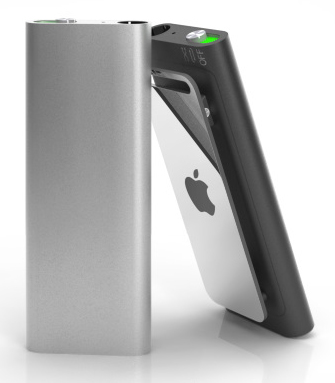
The world’s smallest music player is offering 4GB of storage (approximately 1000 songs) for your music.
The next/previous and volume controls have been moved to the right earbud cord!
There are 3 buttons on the cord: volume-up, volume-down, main button.
Using the main button:
You can play/pause with a single click. Double-click to move to the next track, and triple-click for the previous track.
On the iPod Shuffle body you can find the shuffle/play in order/turn off button, and the 3.5 mm headphone jack.
The amazing new feature is the VoiceOver functionality.
Since there is no display on the iPod Shuffle to view the track info, the VoiceOver is talking to you, reading both the title and the artist of each song!
You just have to press and hold the main button.
Moreover with the aid of the VoiceOver, you can listen to your playlist names, and easily select one of them.
iPod Shuffle can be operated and synced via iTunes.
VoiceOver is also multilingual (iTunes detects the song language), here is a quick list of the supported languages: English, Chinese, Czech, Dutch, French, German, Greek, Italian, Japanese, Polish, Portuguese, Spanish, Swedish, Turkish.
The built-in rechargeable lithium polymer battery lasts about 10 hours when fully charged.
Currently the iPod Shuffle is coming in two colors (silver and black), and costs $79.00.
Well done Apple, yet another cool and innovative gadget!
Official product page
Samsung GO

As much as I like what Samsung is doing with its new Go netbook (known as the N310 overseas), the company is about this close to surpassing Asus as the king of the shotgun-delivery method, releasing netbooks every 2 minutes. Never mind my cattiness, though. The Go is a stylish and far-from-subdued portable that's shaped like a big rubber pebble. In fact, I'd say that this colorful competitor could match Dell's run on the classroom with the Latitude Consider what I'm about to give you an opinionated hands-on--our Go is currently gone (to the labs, that is), but I stole a few minutes with it kicking the tires so that I could tell you exactly what to expect.
It's kind of hard not to start with the case. The Go is a little weighty for a netbook, but you don't notice that when you see the curved corners, which almost make it seem slimmer than what its measurements (10.3 by 7.3 by 1.1 inches) indicate. (It is still a little bigger than the Asus Eee PC 1005HA, though.) Its standout design makes it pop compared with many basic, boxy netbooks on the scene. The only problem: Did Samsung really need to emblazon its corporate logo in a 20,000-point font across the lid? I get that the company wants a little recognition for a good job, but there are more subtle ways to do it. Like neon lights.
That rounded design, with a rubberized shell, fools you into thinking that the Go is more rugged than it really is (kind of like the Latitude 2100). It comes in four hues: Mint Blue, Midnight Blue, Sunset Orange, and Jet Black. A little rubber stopper covers the VGA port and a flap covers the ethernet jack, but everything else sits out there just as you'd expect. But before I bore you with the standard litany of netbook ports, I'd like to talk about something else that pops with color: the 10.1-inch screen.
Like most netbooks, it has a native resolution of 1024 by 600 pixels. If you want something higher (good luck), you could always plug into a VGA port. The LED-backlit, glossy screen is nicely ensconced into the housing. I had to push the screen back to roughly a 45-degree angle; but once it was in that position, I could watch test video locally from the machine and streamed from Hulu with fairly crisp results. Not much in the way of a distracting glare, either, I'm happy to report. Unfortunately, one thing I can't report on at the moment is the audio. I didn't have time to reinstall the audio drivers before returning the Go to the PC World Test Center for our full suite of tests.
But I can tell you how the keyboard feels. The cut-out keys leave little islands of buttons floating on the surface. Since they're reasonably well spaced, typing on them is a breeze--so much so, that you have to go out of your way to hit the wrong key accidentally. And, I must say, the keyboard works very well.
The touchpad, while a good size, could be bigger--I'm still a fan of what the Toshiba NB205-310 was able to cram in. The single-bar mouse button works well enough. In short, it's there and I don't hate it. Glowing recommendation, I know.
Specs-wise, you'll find nothing particularly shocking here: Intel's 1.6GHz Atom N270 CPU, 1GB of RAM (upgradable to 2GB), and a 160GB hard drive lurk under the hood. Samsung spokespeople promise in the neighborhood of 10 hours of battery life from the six-cell battery. (That battery is the big difference between the U.S. model and the lower-octane foreign version.) We'll see how close the Go comes to those claims when we get results from the PC World Test Center.
Otherwise, examine the rest of the Go, and you'll get a sense of netbook déjà vu. Lining the rig are three USB ports (two of which are powered), a 1.3-megapixel Webcam, mic and headphone jacks, a flash card reader, Bluetooth, and 802.11b/g, in addition to the aforementioned ethernet and VGA-out jacks.
Good news: Samsung continues its generosity with software, providing a full easy-to-use suite. Samsung Recovery Solution III is a handy backup and system-restore program that even throws in a few suggestions regarding the possible causes of your machine's problems, giving you a recommended course of backup action to resolve the matter. Easy Network Manager lets you quickly and effortlessly connect to networks; it's a superfluous bit of software for anyone remotely savvy enough, but it puts a pretty face on the standard Windows XP option. And as its name suggests, the Battery Life Extender and Easy Battery Manager makes it simple to toggle the battery-saving modes.
The other bit of software baked onto the machine that I didn't get to try out fully is Phoenix FailSafe, a tool meant to keep your data secure if your netbook gets lost or stolen. It can give you the option for IP-tracking your missing gear (and configure the netbook to snap pictures with the Webcam upon boot), as well as remotely encrypt or erase data or disable access.
Of course, all of this beauty comes at a price: The Go skews slightly toward the costly side, selling for $479 (as of 7/30/09; you'll probably see it for $449 online). Is it worth the cash? On paper--and considering my initial experiences--it would seem so, but we can't give you the final verdict yet. Once the Go completes our WorldBench 6 tests (and our battery-life marathon), we'll update this story with some hard numbers and a final score
2100
HP Mini 5101

HP pioneered the notion of transforming a netbook into a corporate raider. The idea seems like a budget-conscious no-brainer now, but 18 months ago the HP Mini 2133 was a wolf pack of one. Since then, the netbook market has evolved--and so have HP's entries in it. The Mini 5101 is a smart update, with slickly styled lines, a batch of business-ready apps, and finally a serviceable touchpad.
The gunmetal black magnesium alloy casing on the Mini 5101 stands in stark contrast to the shiny, silvery sloped exteriors of previous Minis. The unit measures 10.3 inches by 7.1 inches by 0.9 inch and weighs about 2.6 pounds, making it an ideal traveling companion.
Two other big changes await you beneath the lid. First, the flat, wide keys of earlier HP Mini models are gone, replaced by cut-out keys that float like tiny, springy islands amidst a sea of black plastic (the keyboard configuration resembles that of the HP Probook 4510s). The coated, 95-percent-of-full-size keys are textured enough to permit comfortable typing (abetted by the rubberized textures around the wrist pad), and they don't smudge easily. Camping atop the keyboard are two lit-up quick-launch buttons and the power button.
The second major change: HP moved the mouse buttons from their old location flanking the touchpad to a position below it. That may not seem like a big deal, until you cut and paste documents for a while. HP was the only netbook maker that hadn't dropped the older style (presumably because the company's designers needed so much room for the huge keyboards on their netbooks). The mouse buttons feel great, too: firm and rubbery-textured. If the touchpad were a little larger, the input system would be perfect. (The Toshiba NB205-310 has shown everyone how a netbook touchpad should be designed.)
Under the hood, beyond the 1GB (upgradable to 2GB) of RAM and the 1.6GHz Intel Atom N280 CPU, lie a couple of tasty tidbits. First, the default hard drives spin at 7200 rpm (or you can upgrade to solid-state drives). That performance upgrade could mean a couple of extra points on WorldBench 6 test results. Unfortunately, we haven't been able to run the rig through all of its paces yet; but when we do, we'll report how well the machine fared--and how long its six-cell battery lasted (HP's claims a battery life of 9 hours; we'll see about that). Already we know that the machine does a decent job of dissipating heat. It won't light your lap on fire.
The default Mini 5101 screen uses a 1024-by-600-pixel, 10.1-inch LCD panel, but for just $25 more you can upgrade 1366-by-768-pixel, 10.1-inch screen. Images on the latter looked razor-sharp, though the fonts and icons seemed almost microscopic. The resolution is certainly precise enough for viewing high-definition content onscreen. Some 720p test video took a second or two to start, but looked immaculate once in motion. And the colors, though a little muted, popped with enough clarity that we could make out inky shadows in dark corners.
The Mini 5101 handles audio through front-firing speakers. Though a little tinny, they have enough gusto that you won't mind listening (foe a while) without headphones. The remaining I/O ports consist of a VGA-out, three USB ports, an SD card slot, headphone and mic jacks, an ethernet jack, and a 2-megapixel Webcam.
HP has gathered a fairly robust collection of business-friendly hardware and software features for the Mini 5101. One of the three USB ports is a pass-through charger, which lets you charge gear while your netbook is powered off. HP Fast Charge reloads the standard battery to 90 percent of capacity within 90 minutes. The company's 3D DriveGuard accelerometer protects the hard drive. Security tools enable you to scrub data from prying eyes. HP also throws in Corel Home Office suite, which includes word processing, spreadsheets, and presentation apps.
So how much would you pay for this machine? The Mini 5101 starts at $399 and maxes out at $599. As the price goes up, HP stacks on larger hard-disk (or solid-state) drives and more RAM. Once we've completed our testing of the Mini 5101, we'll give you a full update and a final score. In the meantime, it's safe to say HP has succeeded in delivering a smarter netbook.
Dell Latitude 2100

The multicolored 2100 certainly looks like a playground portable. Covering the outside of the case is the same familiar kickball rubber from your schoolyard days, with subtle branding on the lid and on the underbelly. (Samsung Go, I'm looking at you, pal!) Meanwhile, the spine of the netbook (the back of the battery) has a little plastic strip for personalizing the machine--you know, like a "This netbook belongs to..." tag. Now, while the coating resembles that of a ball, you shouldn't go kicking this thing around. "Ruggedized" doesn't exactly mean rugged. The 2100 definitely looks and feels fairly sturdy for the tasks at hand, but it ain't some OLPC.
Being purpose-built for education--and being able to take a beating from a classroom of hyperactive children--is probably the 2100's biggest selling point. Health-conscious parents will like the fact that you can clean the screen, according to Dell, by regular means (don't grab a sponge or dunk it in a bucket, though), and an antimicrobial keyboard option helps prevent the spread of germs. And I'm sure teachers are happy that Dell has placed a strip-light on the lid that indicates Wi-Fi activity (so that you can see when kids are getting distracted by Hulu or YouTube in class, I suppose). As for whether the tykes will want to carry it, the netbook weighs approximately 2.9 pounds and measures 10.4 by 7.3 by 5.7 inches. A little heavy, maybe, but probably a whole lot more manageable than a stack of textbooks to lug home.
Now, kids, if you've been reading along so far, I'd like to ask you to do me a favor and leave the room for a bit.
Are they gone? Okay. This machine is not for kids. It's for geeky dads who want to justify another tech purchase and maybe loan it to their children during the day. A bare-bones box with Ubuntu sells for $369 sporting the Intel 1.6GHz Atom N270 CPU, 512MB of RAM, and a 16GB solid-state drive. The fully loaded model we received (in tasteful playground-ball red, of course) runs Windows XP on 1GB of RAM (upgradable to 2GB) and a 80GB hard drive; it sells for $559 (as of 7/31/09). I know that education is expensive, but are you willing to drop that many ducats on your child's netbook?
If you're wondering why the price is that high, the simple-resistor, 10.1-inch touchscreen is the most likely culprit. That said, the screen is the 2100's biggest, neatest feature. You'll find that the 1024-by-576-pixel panel has some good aspects and some bad. (That's the native resolution, by the way. You can go higher, but you'll have to drag across a larger desktop.)
First, the good: Indoors the screen looks nice enough, and while it's not exactly razor-sharp, your child probably won't complain. In our use, the colors were only slightly muted. Streaming video from Hulu ran at a steady clip with no major gaffes. And there's no denying that a touchscreen is pretty snazzy. All it took was a quick recalibration (the software, oddly, didn't come preinstalled on the netbook, but it is downloadable from Dell's support site), and it worked like a charm. With fairly solid accuracy, I was able to navigate Web sites or highlight chunks of typed text for deletion.
The downside of the display: It's so muted that even after you put it at the brightest setting on the cloudiest day, you'll be squinting to see what you're typing. I should know--that's what's happening to me right now as I compose this review in a playground, reaquainting myself with my inner child. The only fair, close comparison would be to see how well the 2100 performs next to the Asus Eee PC T91. Unfortunately, that hard-to-find model isn't making much of an appearance here in the United States. If all this touchy talk turns you off, opt for a plain screen and save a few bucks.
The audio, in a word, is horrid. Tinny, tiny speakers bracket the screen, and they crackle and chirp at low volumes. I guess that's one way to ensure that these netbooks won't disturb other children in class...and for teachers, it'll be pretty easy to spot when a student is tuning you out (look for the headphones). Even the mousiest first-gen Acer Aspire One sounded better.
Speaking of mice, the touchpad feels almost microscopic to my meaty mitts. Just looking at the small touch zone makes my fingers ache. There's a world of difference between me and an eighth grader, of course (the kid has more hair). But making an input device the size of the one on the Toshiba NB205-310 would've been a whole lot better than potentially inflicting kids with carpal tunnel. The keyboard, at least, is just big enough; the main QWERTY keys feel good and have the standard button layout. Nothing fancy. The function buttons are teensy, the volume control and mute buttons are huge--and that's it. If you're looking for banks of shortcut keys, look elsewhere.
Underneath the childish exterior, the 2100 has a few other cool optional extras, namely a Webcam, the ability to upgrade from 802.11b/g to 802.11n, and Bluetooth. (An optical drive is, naturally, an external option.)
Last but not least, let's talk performance and battery life. The Latitude 2100 got a score of 34 in WorldBench 6 tests, just a hair below average for netbooks--nothing to panic about. As for the battery life, the machine survived around 6.5 hours (or just about a full school day). It may not be the longest-lived device around, but at least it'll work as long as a student does.
I should add that the 2100 ran nice and quiet, but a little hot. I found that with prolonged use, the lower-left quadrant warmed up a bit. The effect wasn't anything to complain about, but I did notice it.
Does the Dell Latitude 2100 jump to the head of its class? Well, it's certainly the most mature (and the beefiest) take on a netbook in recent memory. And, yeah, if you can look past the price it's a good option for your young scholar--and then when he or she brings it home at the end of the day, maybe Dad can borrow it to tinker in an Ubuntu partition. That's assuming you don't mind that kind of cost for what's billed as a child's computer. Make the Latitude 2100 a little less boxy and kid-oriented, and I'd consider using this touchscreen PC myself.
Highly Portable Bluetooth Mouse with Multi Function Dongle

Ever wanted the precise feel of an optical mouse with out the frustration of wires or the instablity of an IR cordless mouse, try Bluetooth, it's the perfect protocol for use with wireless peripherals hence it's inclusion in Sony PS3 controllers. An attractive pearlescent bluetooth 1000dpi mouse paired with a multifunction dongle a simple but perfect match.
Driverless Webcam - Stylish + Bendable Design

Stylish web camera with a bendable design and featuring driverless installation for easy setup. This handy desk mate will be having you connected to webcalls in moments with high quality and speed of up to 640x480 Pixels at 30fps. Also, you can take some quick 1.3 Mega Pixel pictures direct from the webcam for some quick pictures for friends or family, and the webcam has an adjustable brightness light lamp for using it day or night. A great addition to any person who wants to have fun or conduct business while chatting online.
Flexible Silicone Rubber PC Keyboard

Low priced, incredibly flexible PC keyboard made completely from quality silicon rubber. The ultimate in portable and durable, this is a key board that can go anywhere you go, take extraordinary amounts of abuse, and still work perfectly. This standard QWERTY keyboard is plug and play with Microsoft OS up to XP, and can plug in and be powered either by USB or by PS/2.
Sharp Japan’s new Pocket e-Dictionary, Brain the PW-AC900

Now, a pocket e-Dictionary PW-AC900 has been launched by Sharp in Japan.
Sharp Japan One additional job had done as they add to its Brain line of electronic dictionary. The PW-AC900 has a QWERTY keyboard, 5-inch HVGA LCD touch screen and a touchpad under the keyboard. This is a portable device includes a series of multi-lingual dictionaries, handwriting recognition and offers pronunciation ability. It has a simple text editor and drawing pad.
The PW-AC900 has also MP3 playback function and comes with a USB port and micro SD card slot. You can have this e-dictionary in five colors Red, Black, Blue, Silver and Gold.
Brain – the PW-AC900 pocket dictionary that comes with a delectable touchpad, making it stand out from the rest of the other electronic dictionaries products in the market. The 5″ VGA color LCD display is huge enough to reduce the strain on your eyes whenever you are picking up a new foreign language. There is also 100MB of internal memory to store study notes as well as other to-do lists. So you can use this brain instead of your own organic brain.
Now, let’s see whether people in near future will have this PW-AC900 dictionary in their pocket.

About this Product
The new Sony P series of laptops is designed to be easily portable, in fact even luxurious. It is a fashion statement that can fit into a jacket pocket is the new Vaio P pocket style PC.
You can choose from luxurious premium glossy magnesium body casing options of Garnet Red, Olivine Green, Obsidian Black, & Crystal White (depends on availability).
The Sony Vaio P comes in two models which feature the Intel Atom Z530 processor combined with a solid state hard drive (Model VGN-P15G) & the Intel Atom Z520 Atom processor combined with a normal hard disk (Model VGN-P13G) respectively.
The latter model weighs slightly more at 620 grams as compared to 594 grams of the solid state hard drive model.
FEATURES
8 ultra wide screen
Rectangle shaped body 245mm by 20mm by 120mm
Intel Graphics Media Accelerator 500 Wireless LAN
Sony Memory Stick slot
64GB SSD
Windows Vista operating system
Almost 3 hours of 4 cell battery life
WARRANTY
1 year manufacturer limited carry in warranty offered at authorised service centers
TERMS
Products once sold will not be taken back.
Image shown is indicative. We shall try to send the same color as shown. In case of same color unavailability, we shall send the next best color available.
Shipping Details:
The Seller will ship this product in 7 working days.
Shipping Charges Extra
Fanless Embedded System
ACROSSER is releasing the special promotion for AR-ES5231FLCM1GZC. ACROSSER provides you a surprising price – USD $440 for AR-ES5231FL with Intel Celeron M 1G and DDR2 1GB. It will be your best cost-effective choice for Fanless Embedded System. You can buy this product with $440 price locally in Japan, Netherlands, Denmark, UK, France, USA and Canada. This promotion will be valid from 7/1/2009 to 12/31/2009. For more information, please contact ACROSSER www.acrosser.com .
ACROSSER chose the IntelR 910GMLE chipset and Celeron M 1GHz CPU. We believe it is a good choice for the customer seeking a low cost and average performance solution. It has passed CE/FCC pre-scans, along with ACROSSER’s strict thermal and vibration testing.
AR-ES5231FL includes one SO-DIMM socket for maximum of 1GB System Memory. It uses AC power adapter to furnish DC 12V. AR-ES5231FL’s fanless design reduces failures due to CPU and systems fans, thus increasing the product life and reliability significantly. With its small size (16.5 x 25 x 6.7 cm) and wall mounting kit, the unit easily fits into any application. Its PCI-104 expansion slot provides many options for all kinds of 104 modules to meet specific project needs.
AR-ES5231FL has several Input/Output ports, such as: Dual 18-Bit LVDS and VGA, supporting dual display; one Giga LAN and one 10/100 LAN supporting multiple levels of network traffic; one SATA , one IDE and one compact flash slot, supporting many storage options; USB2.0, 8 GPIO and 4 COM (One RS422/485 Selectable) ports, along with stereo audio, allow the unit to meet various industrial computer applications.
OS support for Windows XP, XP embedded and Windows CE, Linux allows flexibility. 1~255 seconds software programmable watch dog timer can wake system from unexpected failures and save technical service loads.
About ACROSSER
ACROSSER Technology, founded in 1987, designs and manufactures high-quality embedded computers for a large number of application markets. With the vision To Make Your Embedded Idea a Reality, ACROSSER provides innovative Single Board Computers (EPIC, PC/104, 3.5”), Fanless Embedded Systems, Networking Appliances and Panel PC’s. ACROSSER is the leader in embedded computing for a number of markets including Gaming, Networking Security, Industrial Automation, Vehicle PC’s, Digital Signage and Console Servers among others. With a presence in every major continent, ACROSSER provides a Global level of service unparalleled in the Industrial PC Industry.
ACROSSER chose the IntelR 910GMLE chipset and Celeron M 1GHz CPU. We believe it is a good choice for the customer seeking a low cost and average performance solution. It has passed CE/FCC pre-scans, along with ACROSSER’s strict thermal and vibration testing.
AR-ES5231FL includes one SO-DIMM socket for maximum of 1GB System Memory. It uses AC power adapter to furnish DC 12V. AR-ES5231FL’s fanless design reduces failures due to CPU and systems fans, thus increasing the product life and reliability significantly. With its small size (16.5 x 25 x 6.7 cm) and wall mounting kit, the unit easily fits into any application. Its PCI-104 expansion slot provides many options for all kinds of 104 modules to meet specific project needs.
AR-ES5231FL has several Input/Output ports, such as: Dual 18-Bit LVDS and VGA, supporting dual display; one Giga LAN and one 10/100 LAN supporting multiple levels of network traffic; one SATA , one IDE and one compact flash slot, supporting many storage options; USB2.0, 8 GPIO and 4 COM (One RS422/485 Selectable) ports, along with stereo audio, allow the unit to meet various industrial computer applications.
OS support for Windows XP, XP embedded and Windows CE, Linux allows flexibility. 1~255 seconds software programmable watch dog timer can wake system from unexpected failures and save technical service loads.
About ACROSSER
ACROSSER Technology, founded in 1987, designs and manufactures high-quality embedded computers for a large number of application markets. With the vision To Make Your Embedded Idea a Reality, ACROSSER provides innovative Single Board Computers (EPIC, PC/104, 3.5”), Fanless Embedded Systems, Networking Appliances and Panel PC’s. ACROSSER is the leader in embedded computing for a number of markets including Gaming, Networking Security, Industrial Automation, Vehicle PC’s, Digital Signage and Console Servers among others. With a presence in every major continent, ACROSSER provides a Global level of service unparalleled in the Industrial PC Industry.
Apple Preparing iPod Touch With Camera, Microphone: Source

Rumors have swirled about Apple readying a new version of the iPod Touch with a camera and microphone, which, combined with a Skype account, would pretty much obviate the need for a home phone line once and for all.
A well-connected source tells us those rumors are on the money, and that Apple’s factories in China are already manufacturing iPod Touch models with integrated cameras and microphones. An Apple spokesman declined to comment when reached by phone.
If iPod Touches with cameras and microphones go on sale “in two to three months,” as our source expects them to (and which corresponds with our expected timeframe), they will transform the entertainment-oriented iPod Touch line into a voice communications tool wherever WiFi is available.
In addition to these voice-over-IP capabilities, which should have telephone providers quaking in their boots, the microphone (and camera) would enable the iPod Touch to understand voice commands, capture video and images, and work with a wider variety of programs in the App Store.
(Plus, as some Wired commenters have suggested, one could combine a microphone-equipped iPod Touch with the Verizon MiFi personal hotspot creator to enable — at long last — the iPhone experience on Verizon’s network

With a 320 GB (Gigabytes) Hard Disk the Fujitsu Siemens CCE GBR 110137 006 has more than enough storage space for all your Digital media, documents and software. The Blu-Ray BD-ROM ensures the Fujitsu Siemens CCE GBR 110137 006 has everything you need.
Get the most out of the Fujitsu Siemens CCE GBR 110137 006 with Windows Vista Home Premium Edition pre-installed, including built in wireless networking. Get your work done fast using the 2.13GHz CPU AMD Turion X2 processor (CPU) and take advantage of the ATI Mobility Radeon HD Video Chipset. See it all on the impressive 15.4 inch Displaywith a 1280 x 800, WXGA resolution.
Toshiba Portege M750 116 (PPM75E-03G017EN) Laptop

With a 160 GB (Gigabytes) Hard Disk the Toshiba Portege M750 116 has more than enough storage space for all your Digital media, documents and software. The DVD Supermulti ensures the Toshiba Portege M750 116 has everything you need.
Your choice of Windows with Microsoft Windows Vista Business with Windows XP Pro Recovery Media, including built in wireless networking and Bluetooth technology. Get your work done fast using the 2.4GHz CPU Intel Core 2 Duo processor (CPU) and take advantage of the Intel GMA Series Video Chipset. See it all on the impressive 12.1 inch Displaywith a 1280 x 800, WXGA resolution
Samsung P510 FA06UK (NP-P510-FA06UK) Laptop

With a 160 GB (Gigabytes) Hard Disk the Samsung P510 FA06UK has more than enough storage space for all your Digital media, documents and software. The DVD Supermulti ensures the Samsung P510 FA06UK has everything you need.
Your choice of Windows with Microsoft Windows Vista Business with Windows XP Pro Recovery Media, including built in wireless networking and Bluetooth technology. Get your work done fast using the 2.16GHz CPU Intel Pentium Dual Core processor (CPU) and take advantage of the Intel GMA Series Video Chipset. See it all on the impressive 15.4 inch Displaywith a 1280 x 800, WXGA resolution
Samsung NC10 KA03UK (NP-NC10-KA03UK LSB) Laptop

With a 160 GB (Gigabytes) Hard Disk the Samsung NC10 KA03UK has more than enough storage space for all your Digital media, documents and software.
The feature packed Samsung NC10 KA03UK, including built in wireless networking and Bluetooth technology. Get your work done fast using the 1.6GHz CPU Intel Atom Processor processor (CPU) and take advantage of the Intel GMA Series Video Chipset. See it all on the impressive 10.4 inch Display
Samsung N310 KA01UK (NP-N310-KA01UK) Laptop

With a 160 GB (Gigabytes) Hard Disk the Samsung N310 KA01UK has more than enough storage space for all your Digital media, documents and software.
The feature packed Samsung N310 KA01UK, including built in wireless networking and Bluetooth technology. Get your work done fast using the 1.6GHz CPU Intel Atom Processor processor (CPU) and take advantage of the Intel GMA Series Video Chipset. See it all on the impressive .
Asus 1000H BLK067X (EEE PC 1000H BLK067X) Laptop

With a 160 GB (Gigabytes) Hard Disk the Asus 1000H BLK067X has more than enough storage space for all your Digital media, documents and software.
The feature packed Asus 1000H BLK067X, including built in wireless networking and Bluetooth technology. Get your work done fast using the 1.6GHz CPU Intel Atom Processor processor (CPU). See it all on the impressive 10.1 inch Displaywith a 1024 x 600, WSVGA resolution.
Asus 1000H WHI066X (EEE PC 1000H WHI066X) Laptop

With a 160 GB (Gigabytes) Hard Disk the Asus 1000H WHI066X has more than enough storage space for all your Digital media, documents and software.
The feature packed Asus 1000H WHI066X, including built in wireless networking and Bluetooth technology. Get your work done fast using the 1.6GHz CPU Intel Atom Processor processor (CPU). See it all on the impressive 10.1 inch Displaywith a 1024 x 600, WSVGA resolution.
Compaq HP 4515 NX460EA (NX460EA) Laptop

With a 250 GB (Gigabytes) Hard Disk the Compaq HP 4515 NX460EA has more than enough storage space for all your Digital media, documents and software. The Double Layer DVD±RW ensures the Compaq HP 4515 NX460EA has everything you need.
Your choice of Windows with Microsoft Windows Vista Business with Windows XP Pro Recovery Media, including built in wireless networking and Bluetooth technology. Get your work done fast using the 2.3GHz CPU AMD Turion X2 processor (CPU) and take advantage of the ATI Mobility Radeon HD Video Chipset. See it all on the impressive 15.6 inch Displaywith a 1366 x 768 resolution.
Upgrade the Memory on this Laptop,
Introducing the new Mac Pro, featuring the Intel Xeon “Nehalem” processor.


Many quad-core processors are composed of two separate dies, which means some cached data has to travel outside the processor to get from core to core. That’s an inefficient way to access information. Enter the Quad-Core Intel Xeon “Nehalem” processor. Its single-die, 64-bit architecture makes 8MB of fully shared L3 cache readily available to each of the four processor cores. The result is fast access to cache data and greater application performance. Combine that with the other technological advances and you get a Mac Pro that’s up to 1.9x faster than the previous generation.1
Monday, August 3, 2009
Intel debuts new Core i7 desktop CPU

Product summary
CNET Editors' ChoiceNov 08 The good:
Fastest high-end desktop CPU; supporting motherboard supports both graphics card vendors' multicard technologies.
The bad:
Requires an expensive new motherboard; chipset needs three memory sticks for maximum efficiency.
The bottom line:
Thanks to an expensive new motherboard requirement, Intel's new Core i7 desktop processors will remain enthusiast and professional-level parts until more affordable complementary hardware comes out later next year. Speed never comes cheap, however, and if you're willing to spend for it now, you'll find yourself in possession of the fastest CPU on the market.
Specifications:
Product Type: Processor ; Processor Type: Intel Core i7 Extreme Edition I7-965 ; Packaging Type: FC-LGA8 See full specs
Price range: $854.79 - $1,195.70 check prices
Subscribe to:
Posts (Atom)